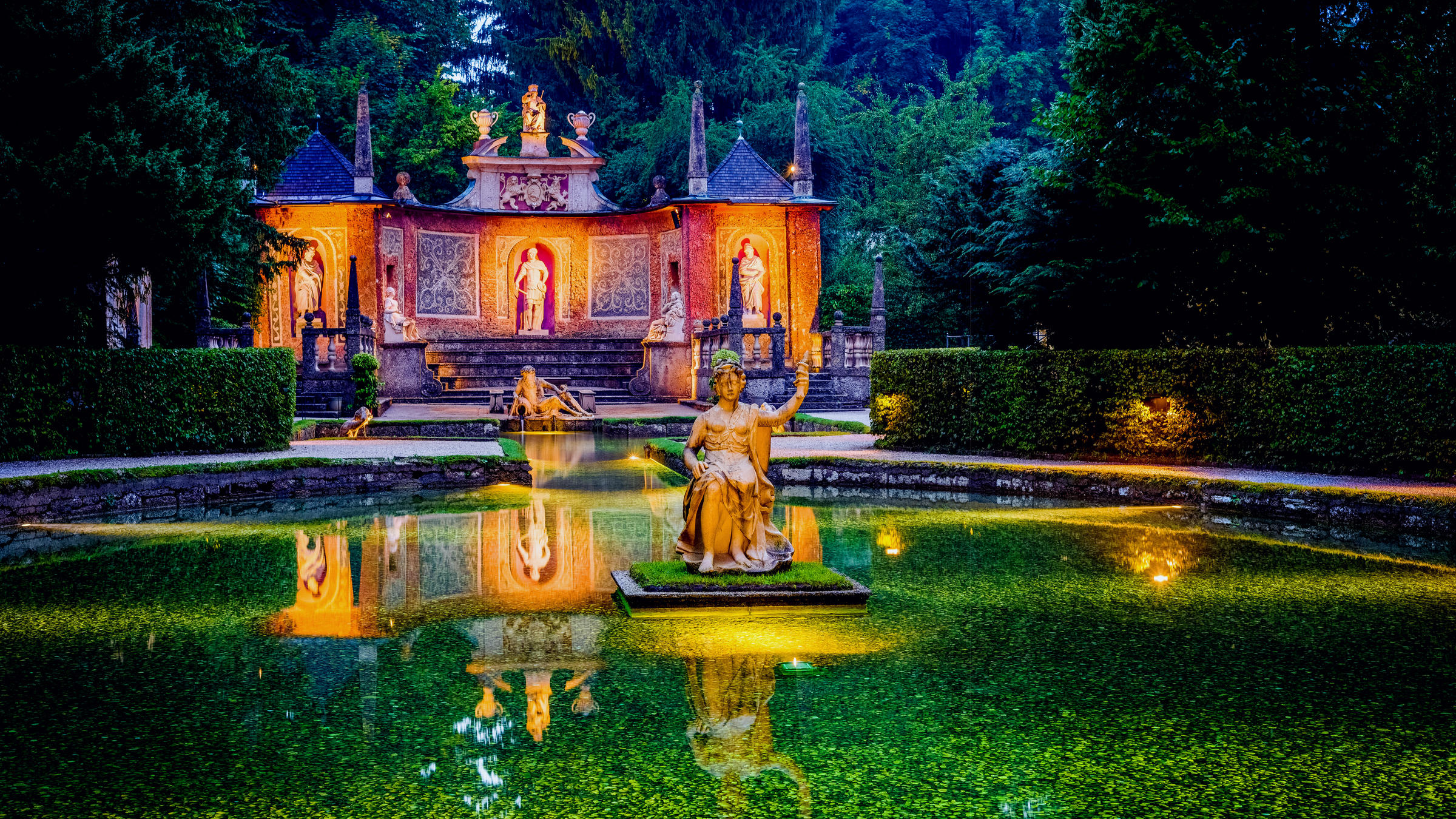
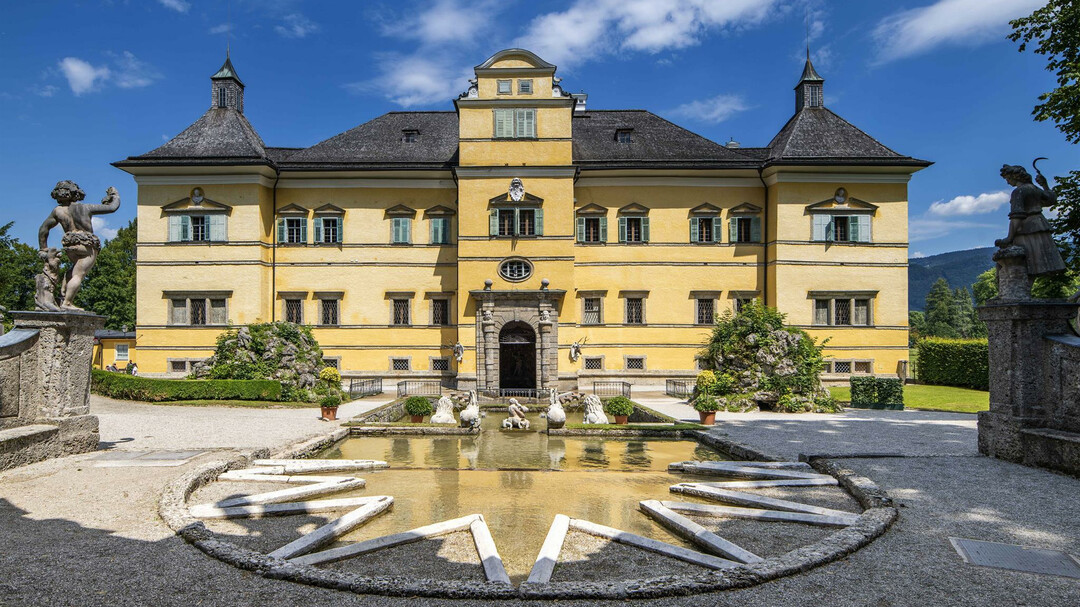
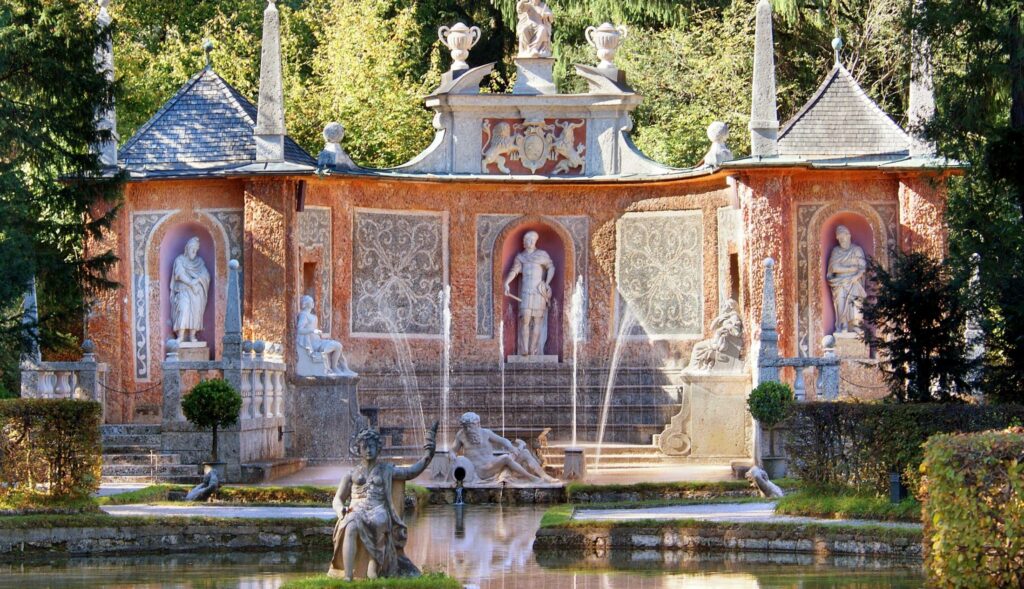
Hellbrunn Palace is a Baroque palace located in Salzburg, Austria. It was built in the early 17th century for Markus Sittikus von Hohenems, Prince-Archbishop of Salzburg. The palace is notable for its ornate architecture and intricate water features, including trick fountains that were designed to surprise and delight guests. The palace is surrounded by gardens and parkland, which include a grotto, a maze, and a large pond. Today, Hellbrunn Palace is open to the public and is a popular tourist destination. Visitors can take guided tours of the palace and its grounds, and see the trick fountains in action during the summer months. The palace is also a popular venue for events and concerts.
Brief History of Hellbrunn Palace
Hellbrunn Palace in Salzburg was built in the early 17th century for Markus Sittikus von Hohenems, Prince-Archbishop of Salzburg. The palace was designed as a summer residence and was intended to be a place of leisure and entertainment. The palace features an ornate Baroque architecture and intricate water features, including trick fountains that were designed to surprise and delight guests. The palace was built by the architect Santino Solari, who also built the palace’s surrounding gardens, parkland, grotto, maze and large pond.
After Markus Sittikus von Hohenems death, the palace passed through several owners and was used for various purposes, including being used as a hunting lodge and a palace for visiting dignitaries. During World War II, the palace was used as a hospital and a military training ground. After the war, the palace was returned to the city of Salzburg, and it was opened to the public as a museum in the 1950s. Today, Hellbrunn Palace is a popular tourist destination and a venue for events and concerts.
10 TOP TOURIST ATTRACTIONS IN SALZBURG
What to do in Hellbrunn Palace
There are several things to do at Hellbrunn Palace in Salzburg, Austria:
- Take a guided tour: Visitors can take a guided tour of the palace and its grounds to learn about the history and architecture of the palace, as well as see the trick fountains in action.
- Explore the gardens and parkland: The palace is surrounded by beautiful gardens and parkland, which include a grotto, a maze, and a large pond. Visitors can take a leisurely stroll through the gardens and take in the sights and sounds of nature.
- Visit the Trick Fountains: One of the main attractions of the palace is its trick fountains. Visitors can watch as water jets surprise unsuspecting guests and enjoy the playful nature of the fountains.
- Attend a concert or event: The palace is a popular venue for events and concerts. Visitors can check the schedule and attend a performance during their visit.
- Visit the palace museum: Visitors can take a look at the palace museum which contains some of the palace’s original furnishings, paintings, and sculptures.
- Take a horse-drawn carriage ride: Visitors can also take a horse-drawn carriage ride around the palace’s grounds and see the palace from a different perspective.
- Have a picnic: Visitors can pack a picnic and enjoy a meal in the palace’s beautiful gardens.
- Visiting the “Salzburg Marionette Theater” located in the palace’s grounds, where you can watch puppet shows and learn about the history and art of marionettes.
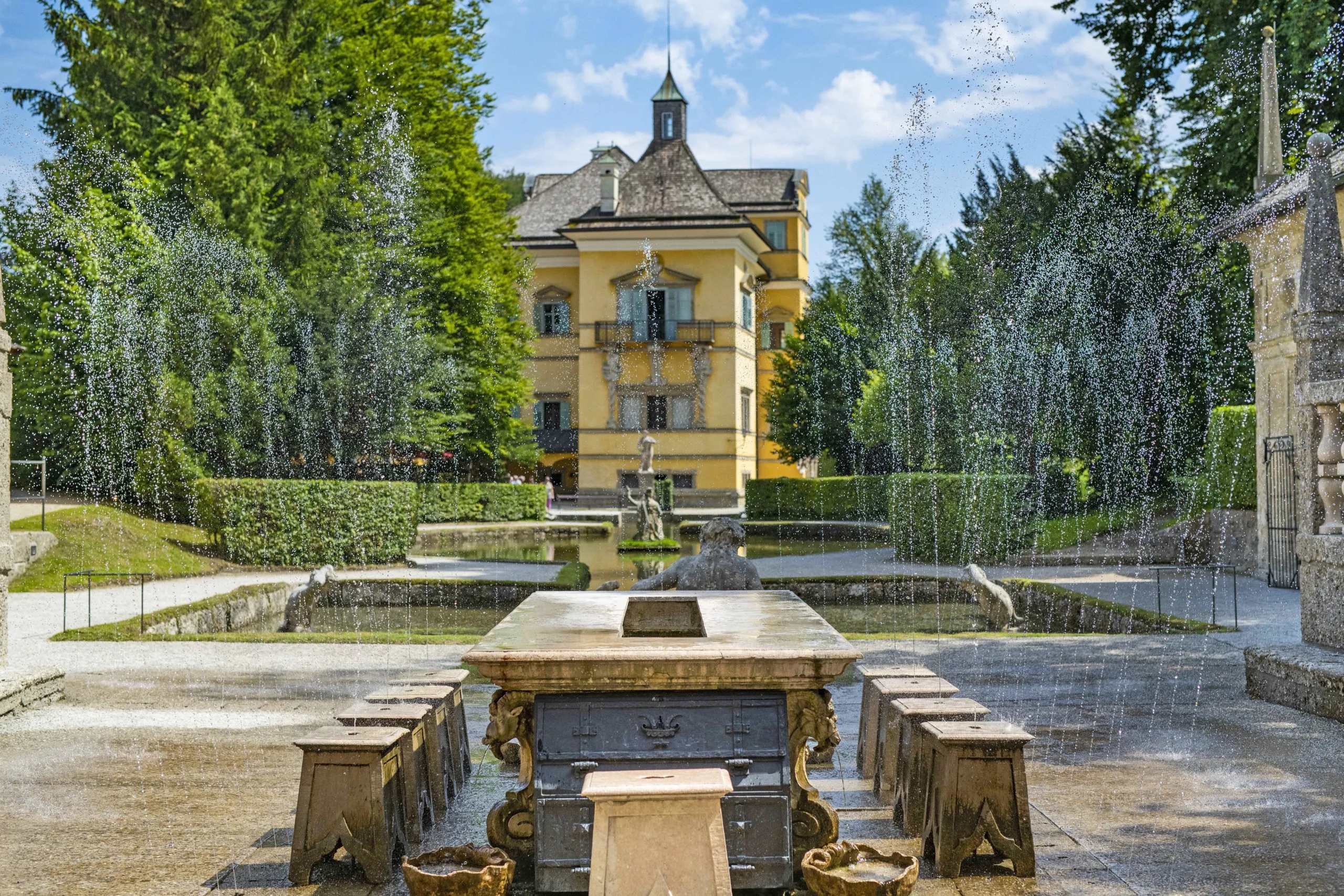
The Trick Fountains– Experience the world-famous water features
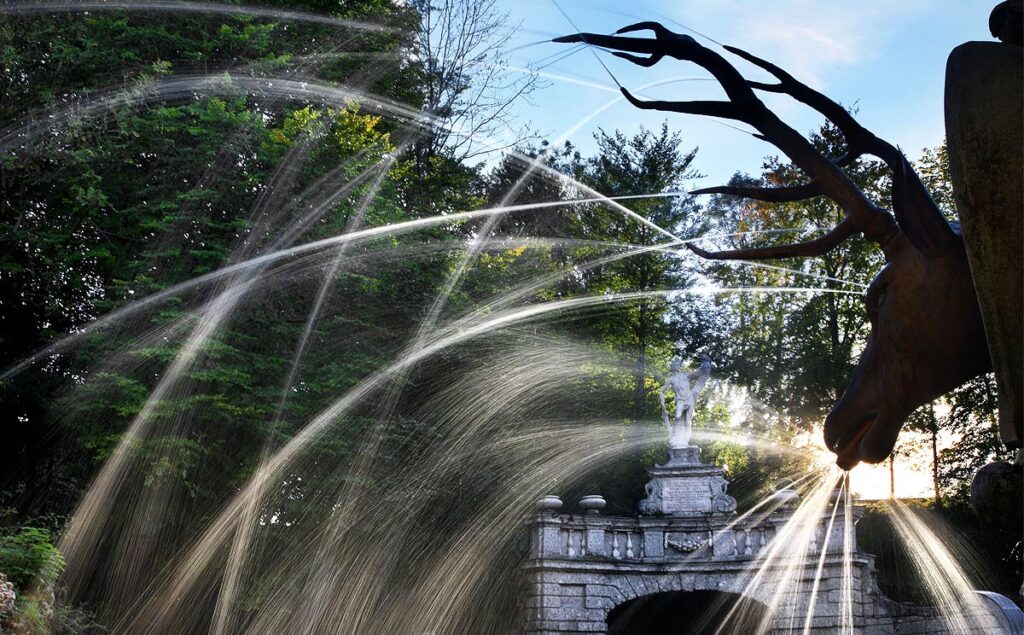
Markus Sittikus had a system built to amaze, entertain, and fool his guests with water machines, grottos, and fountains. A toy with manners for older children. However, the water games provide more than just wet, happy fun: you get to experience a one-of-a-kind cultural gem that cannot be found in this form anywhere else. Water-moving figures and water-spitting deer await you. Expect the unexpected!
The trick fountains are located throughout the palace’s gardens and parkland, and include features such as hidden spouts that shoot water at unsuspecting visitors, as well as fountains that are activated by levers or buttons. Some of the most notable trick fountains include the “Water Organ” fountain, which creates music with the flow of water, and the “Rattenfänger” fountain, which features a statue of a rat catcher that sprays water when a lever is pulled.
The fountains are operational during the summer months, typically from late-May to late-September. Visitors can watch the fountains in action and even get a chance to play with the levers and buttons to activate the fountains themselves.
Take a virtual tour
The Grottoes
The Grottoes in the trick fountain of Hellbrunn Palace are a series of underground caverns and tunnels that were built in the 17th century as part of a water park. They are located beneath the palace gardens in Salzburg, Austria. The grottoes feature intricate rock formations, sculptures, and water features that are designed to surprise and delight visitors. Some of the grottoes have been restored and are open to the public, while others have been sealed off. They are considered as one of the most famous tourist attraction in Salzburg, Austria.
The Neptune grotto, the ruin grotto, the shell grotto, the mirror grotto, and the Vogelsang grotto are masterpieces of Mannerism design art that can send visitors into horrified horror and delighted astonishment. Not just because of their architectural design, such as the grotto of ruins, which was designed to give the impression of complete destruction down to the smallest detail.
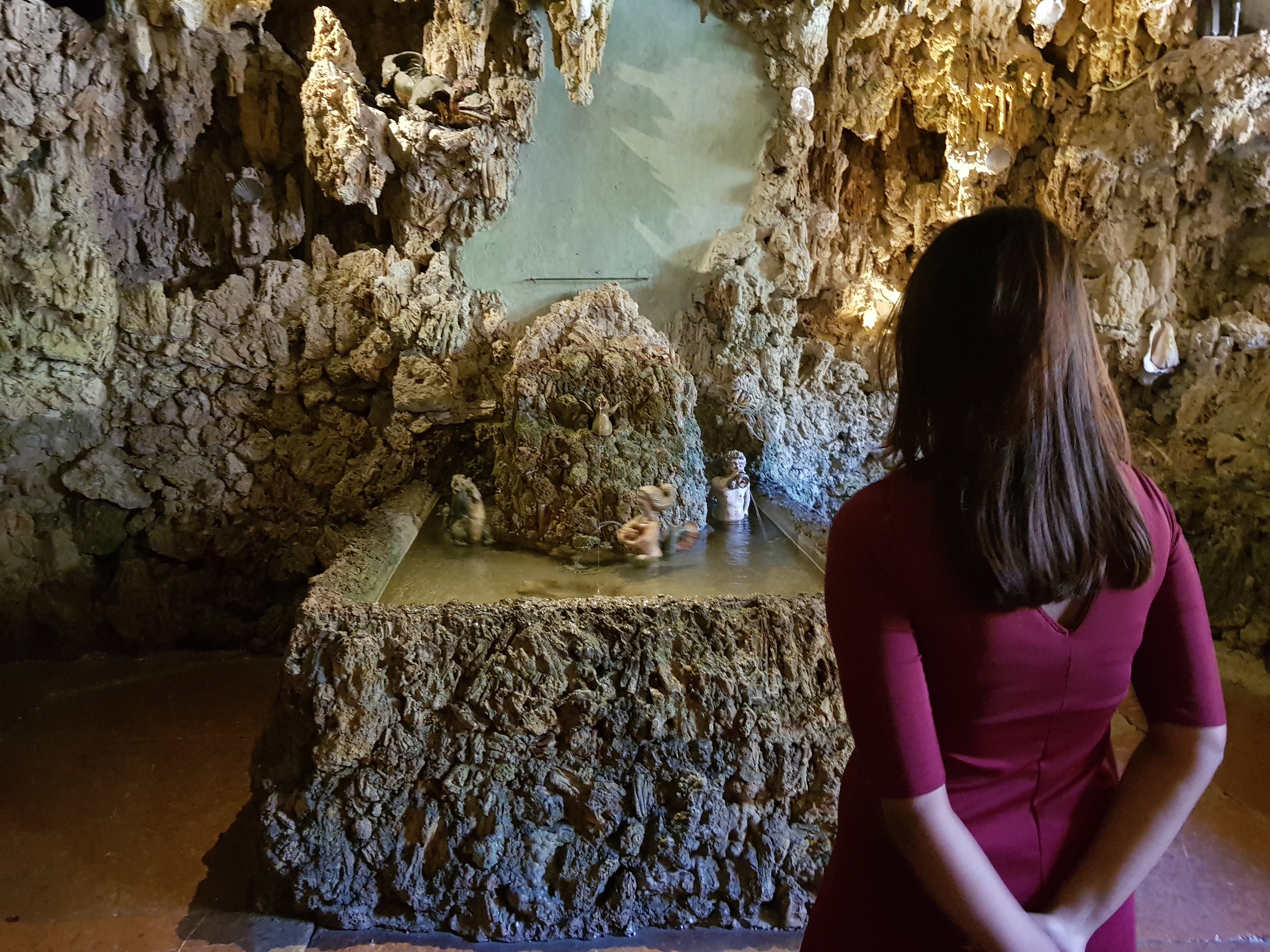
The Neptune Grotto
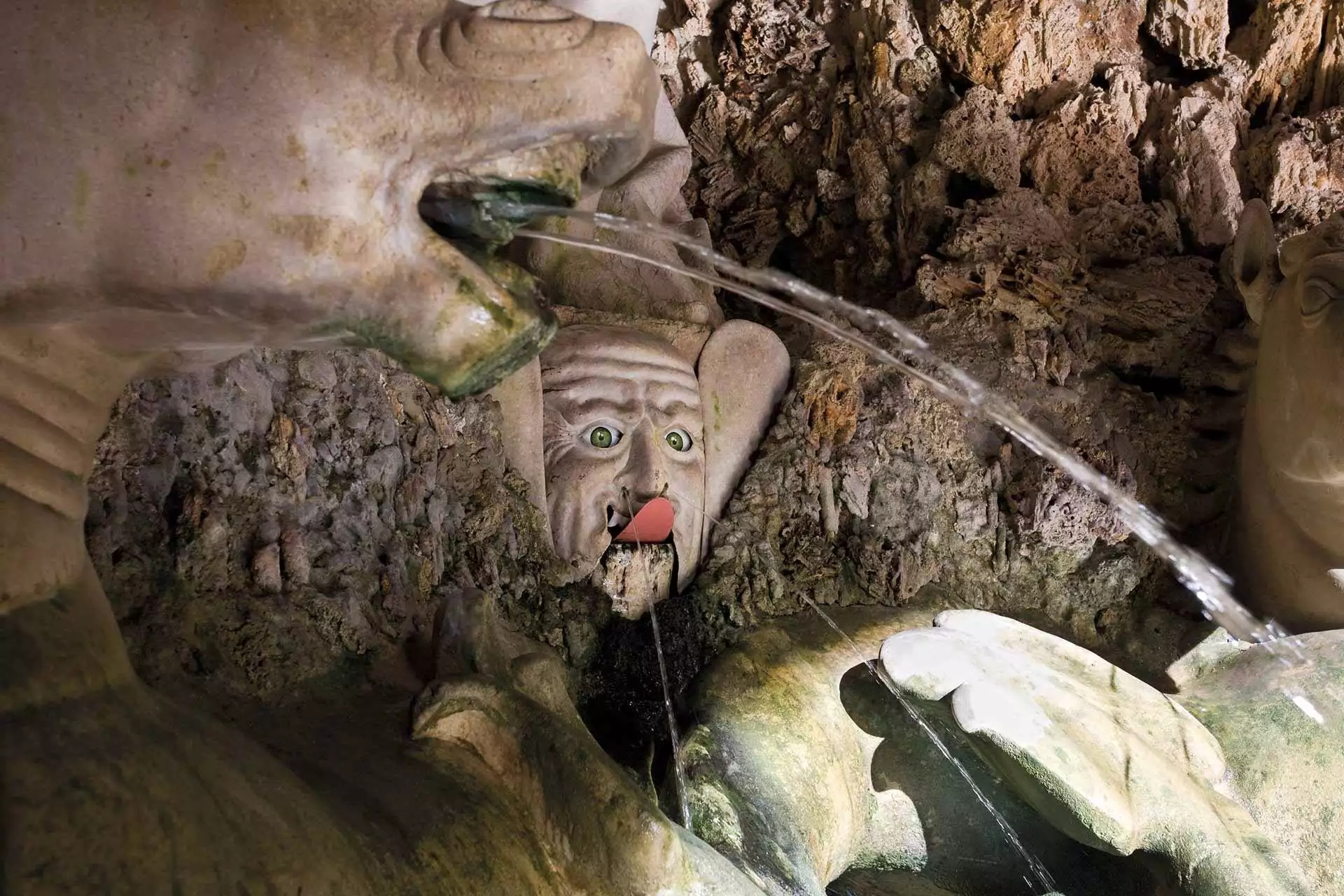
The Germaul, a tinny grimace powered by water, rolls its eyes and sticks out its tongue at the viewer, astounded the guests at the Neptune Grotto fountain. The first taste of the countless hidden nozzles and tubes was in this grotto: a rainbow-colored downpour:
The Vogelsang grotto
10 different bird calls can be heard from a number of niches in the tuff paneling in the walls in the Vogelsang grotto. The wheel turns the bellows, which forces air into the windchest of an organ. This movement is powered by a turbine-like water wheel mounted horizontally in the floor, which rotates the pinned cylinder four times per minute. The pin roller has eleven rows of pins for the eleven bird calls.
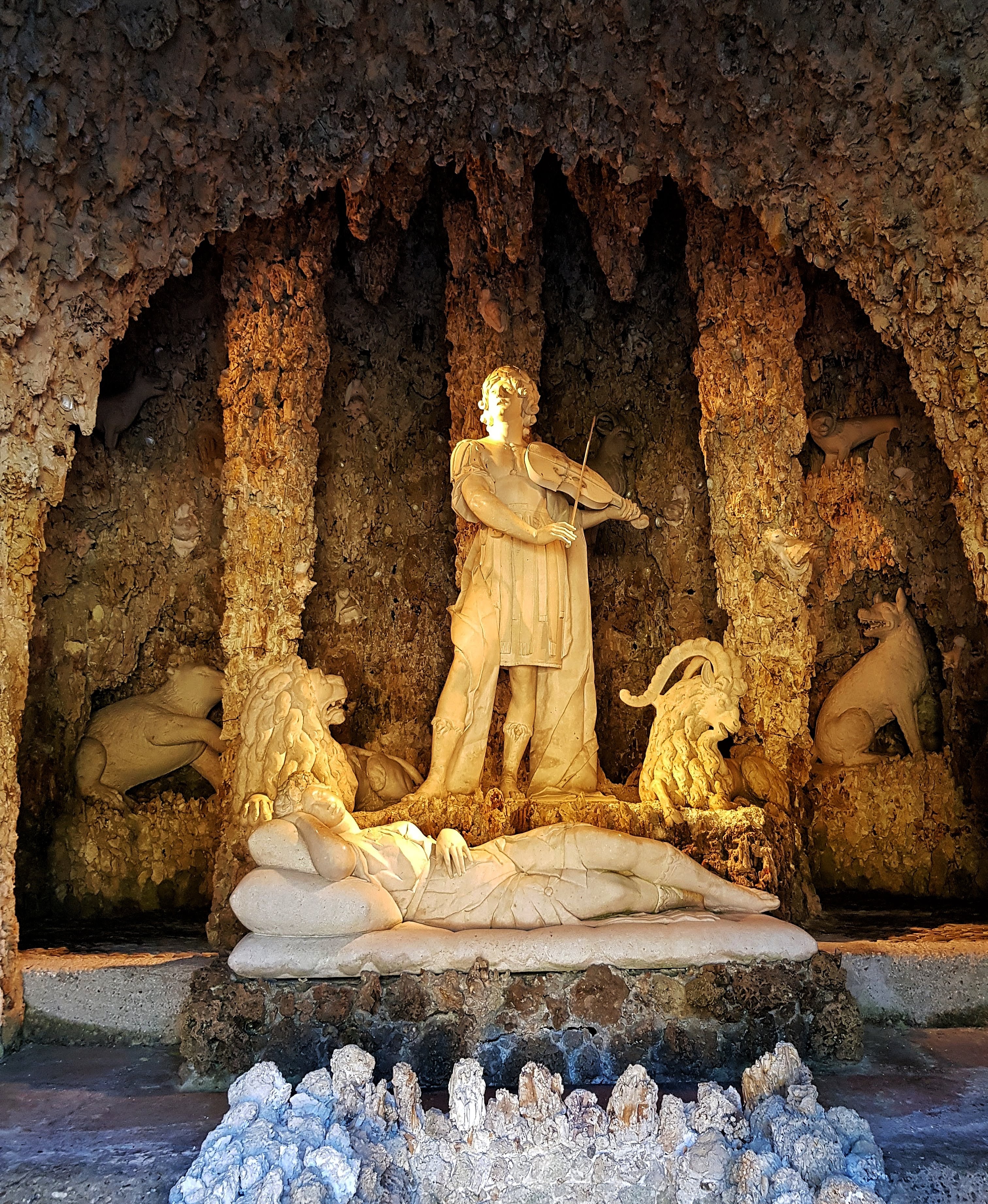
The Orpheus Grotto
In this underworlds lies the poor, Eurydice who listens to her lover’s violin playing. Orpheus is a methodological figure from ancient greece. He was a gifted singer. According to legend he looses his wife after she was beaten by a snake. He failed in his attempt to free her from the underworld with his singing. Here in the grotto , she is lying on a pillow and listen to his husbands violin playing with many wild animals. This is one example of where the prince, archbishop who is in art and music lover presented himself as a patron of the arts.
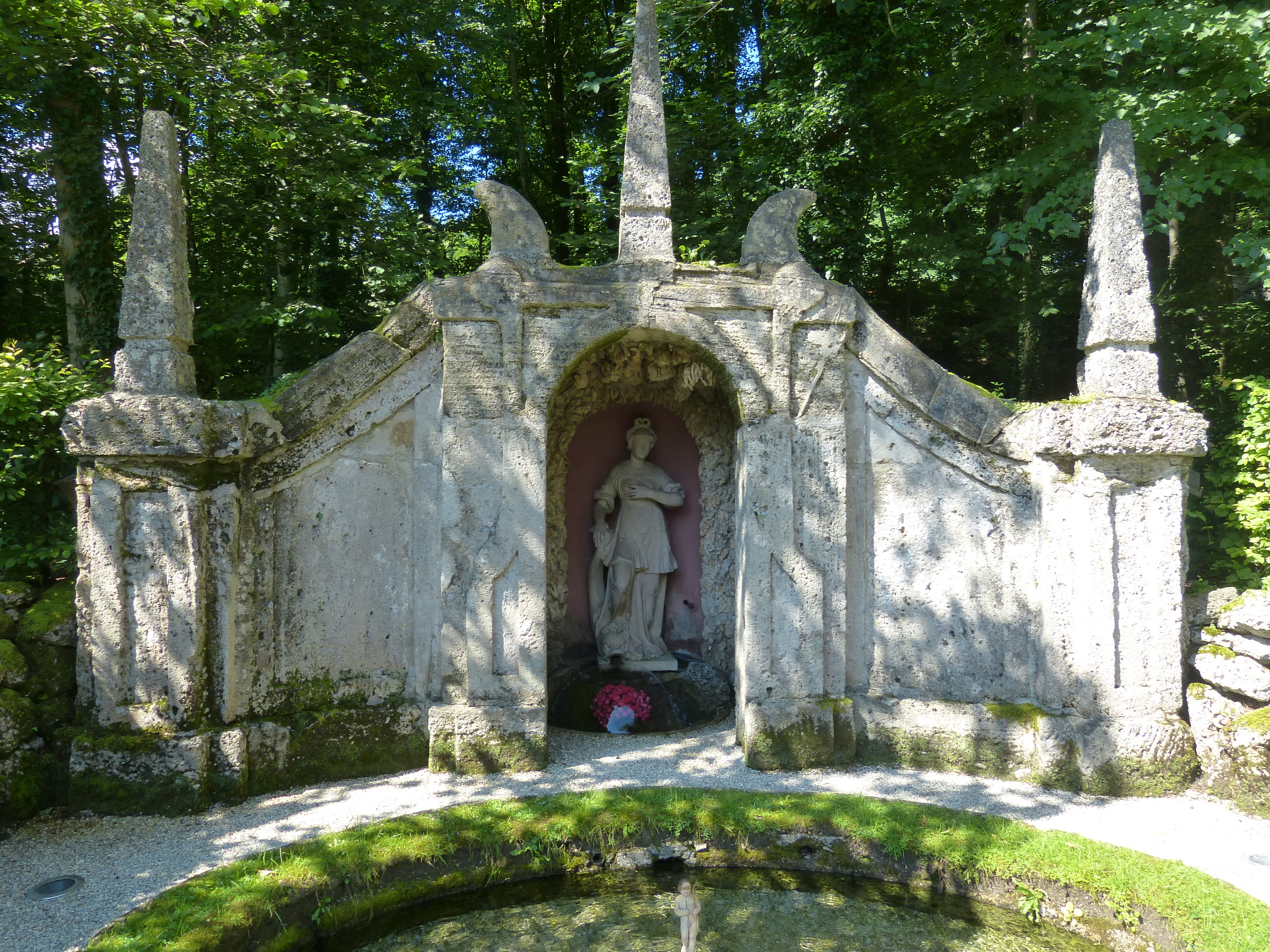
The Venus Grotto
Venus stands in a grotto and watches over her fountain. If you look closely you can see a bouquet of flowers at her feet covered with a curtain of water by a statue of a dolphin and it stays fresh for many days.
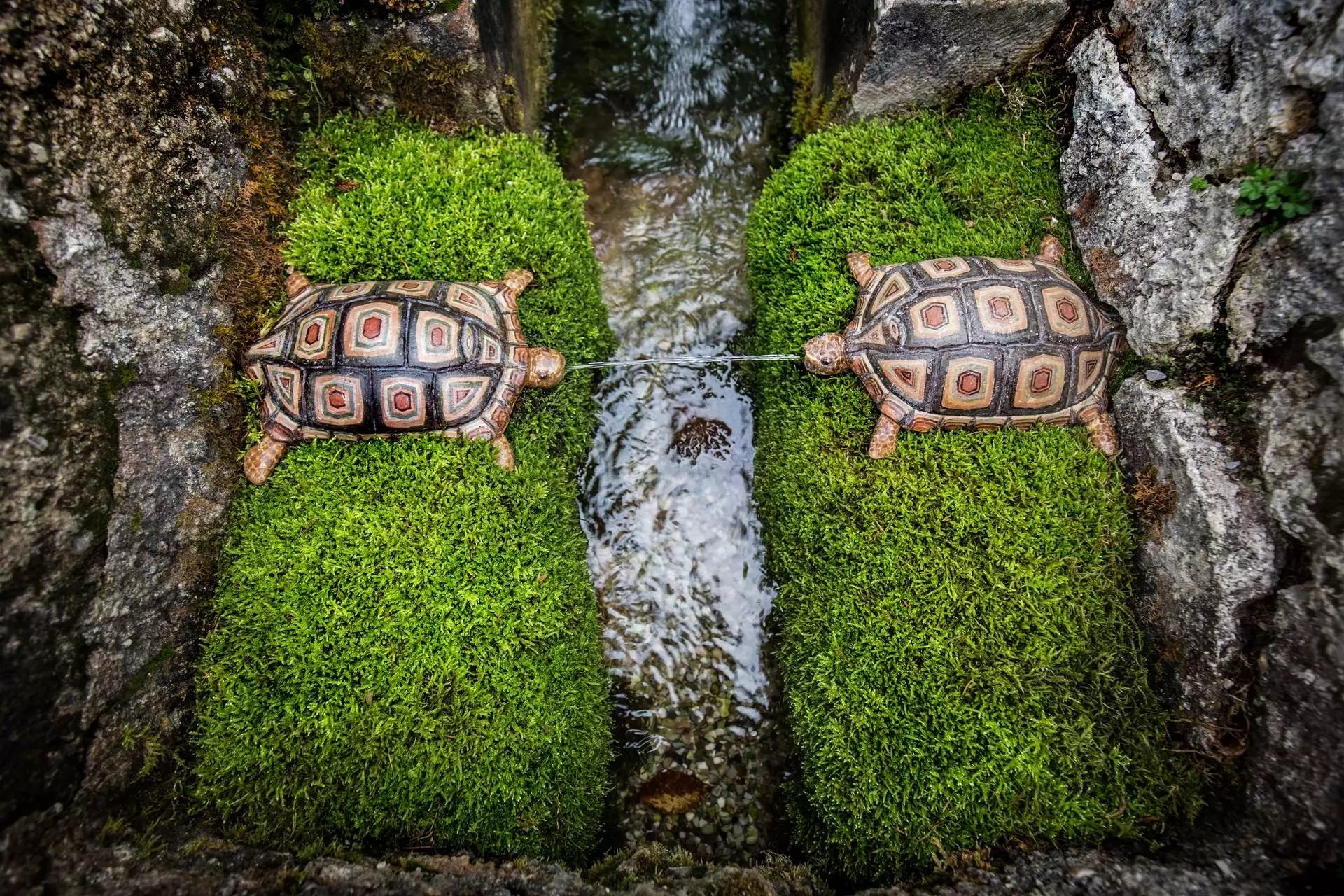
The two tin turtles stand out in the draining canal because they appear to be spewing water into each other’s mouths, giving the impression of a solid glass rod because neither the inflow nor outflow of the jet can be seen.

The Shell Grotto
It unfolds the effects through the richy colored stucco work ornaments and paintings.
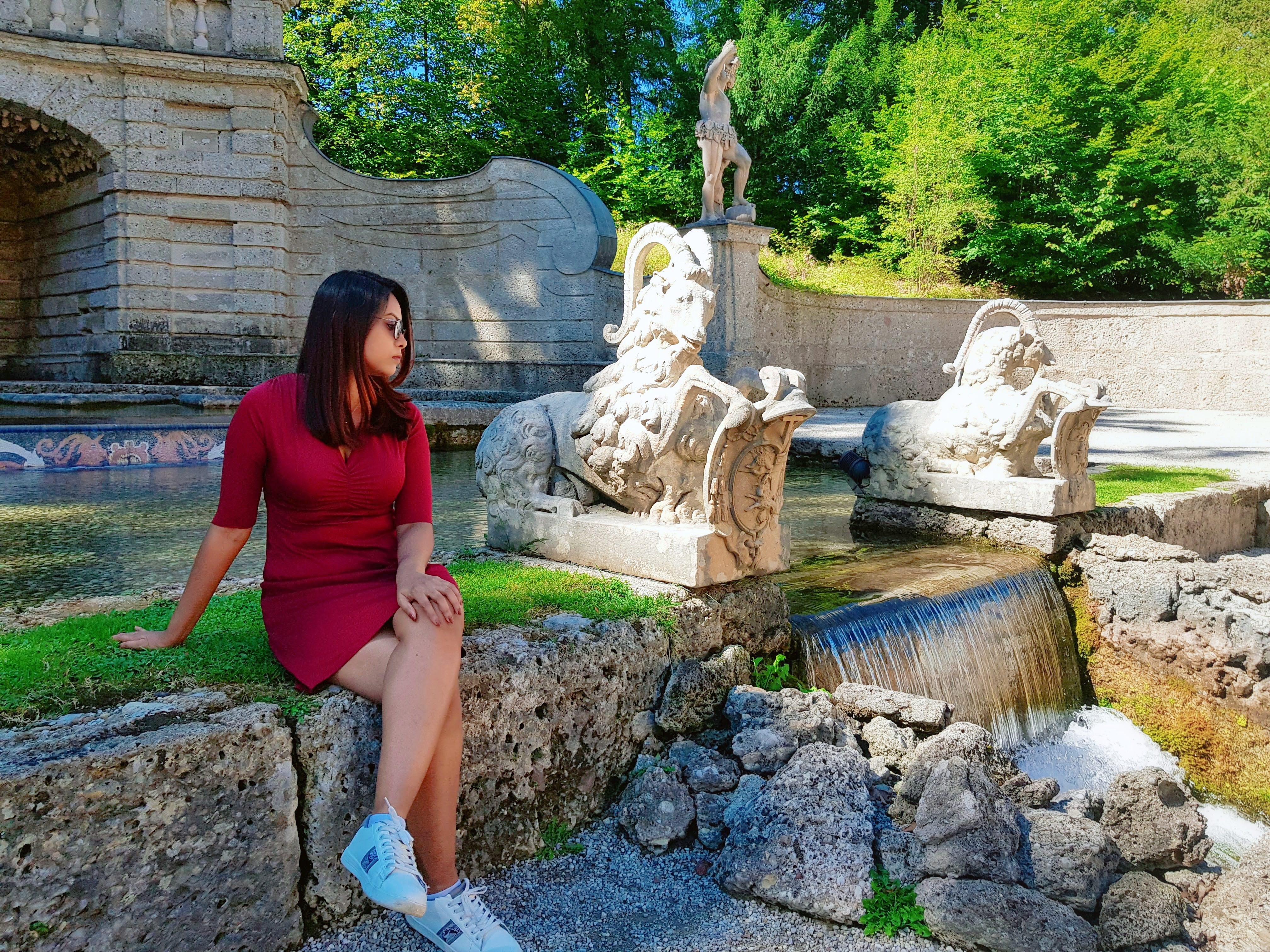
The star pond
The Altemps fountain is the main source of water features and flows. It is named after Marco Sittico d’Altemps, the uncle of prince archbishop of Rome.
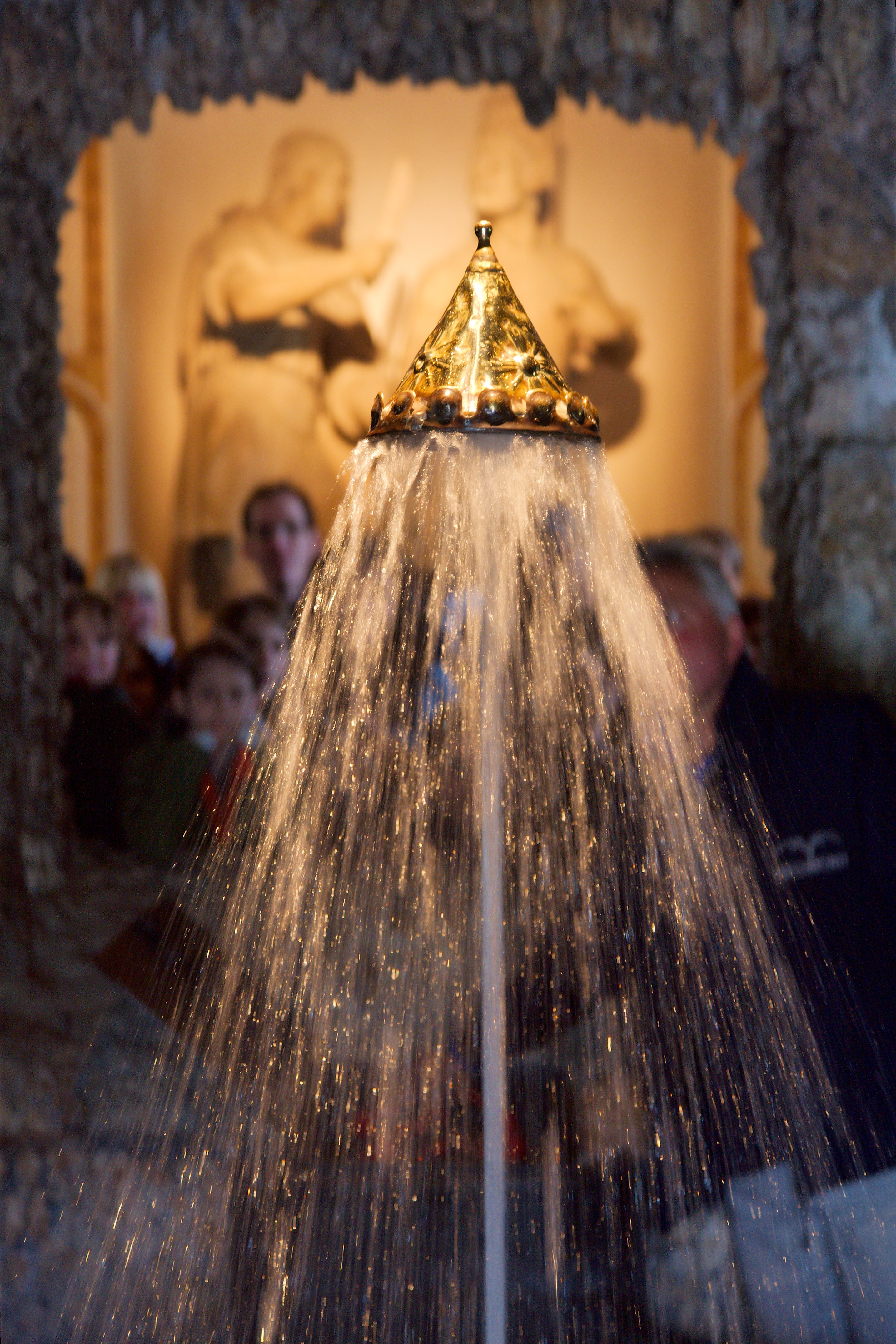
The Crown Grotto
Its center is a small rock with snakes and frogs on which an adjustable jet of water lifts a metal crown
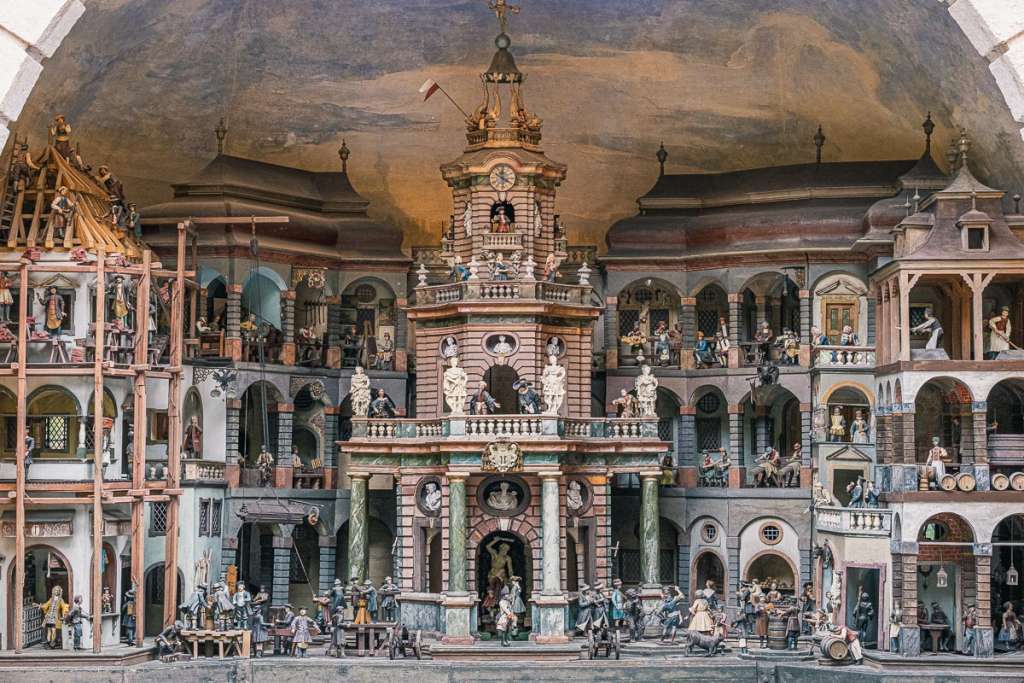
The Mechanical Theater
The water powered showpiece was built by the Hallein miner Lorenz between 1749 to 1752. Its an attractive depiction of life activity in a small baroque town with all its trades and ranks. citizens go for walk, musicians play music, butchers slaughter a calf, a house is laid and many other craftsman are also at work. There a a total of 163 linden wooden figures in the theater and they are movable.
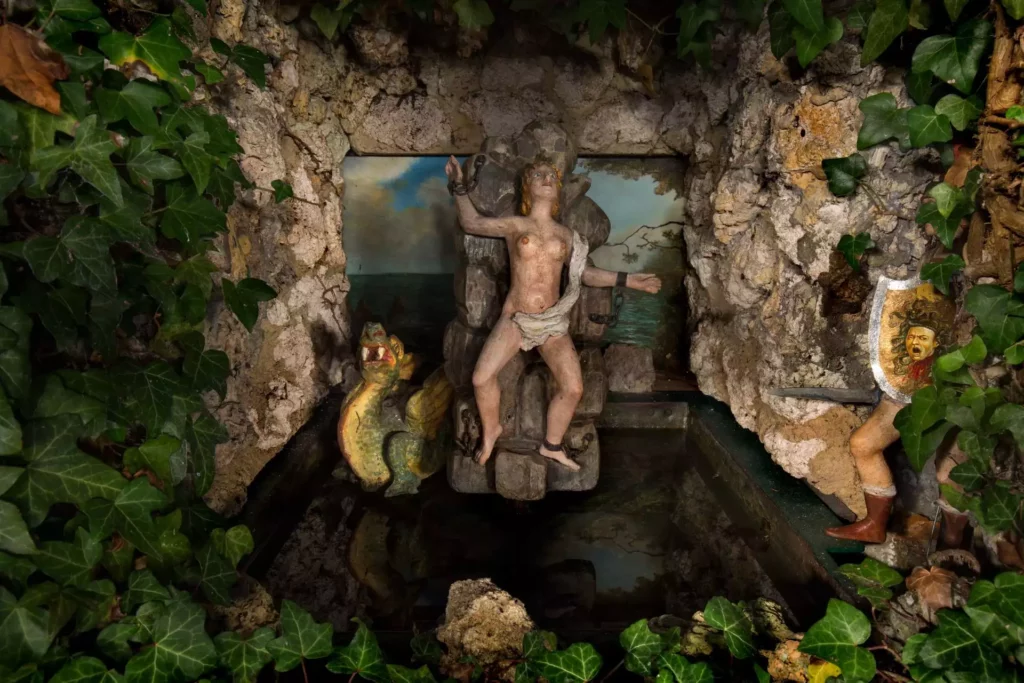
The little 5 Mechanical Theaters
Here you can see five small grottos with hydraulic drives. This globally unique machines have survived almost 400 years and gives us an authentic pictures of the past which shows the following secenes-
- a grinder work
- Apollo flaying the satyr marsyas
- Perseus fighting the sea monsters to free Andromeda
- A miller at work
- A potter’s workshop
Opening hours of the palace and Trick fountains
It’s important to note that the fountains are not operational all the time, and the palace may choose to turn them off for maintenance or conservation purposes. It’s best to check with the palace in advance or during your visit to confirm the operation schedule. The latest update from the website is the following-
Daily from 31 March until 1 November 2023
Trick fountains, palace, folklore museum
April: 9:30 am-5:30 pm
May, June: 9:30 am-6:30 pm
July, August: 9:30 am-7 pm
September: 9:30 am-6:30 pm
October, 1 November: 9:30 am-5:30 pm
(last admission 1 hour before closing)
Tours with audio guide
Duration of tour: trick fountains approx. 50 min. (admission every 20 minutes), palace approx. 40 min.
Prices of Trick fountains
Palace with permanent exhibition, folklore museum
Adults € 13.50
Children and pupils (4-18 years) € 6.00
Students (19-26 years, ID required) € 8.50
People with disabilities (disability pass required): adults € 11.00, children € 3.00 – accompanying person free, if indicated on the disability pass
Families (2 adults and 1 child) € 29.50 – every additional child € 3.00
Groups of 20 adults or more, per person € 12.00
SalzburgCard: one time free admission
Free admission to park and orangery