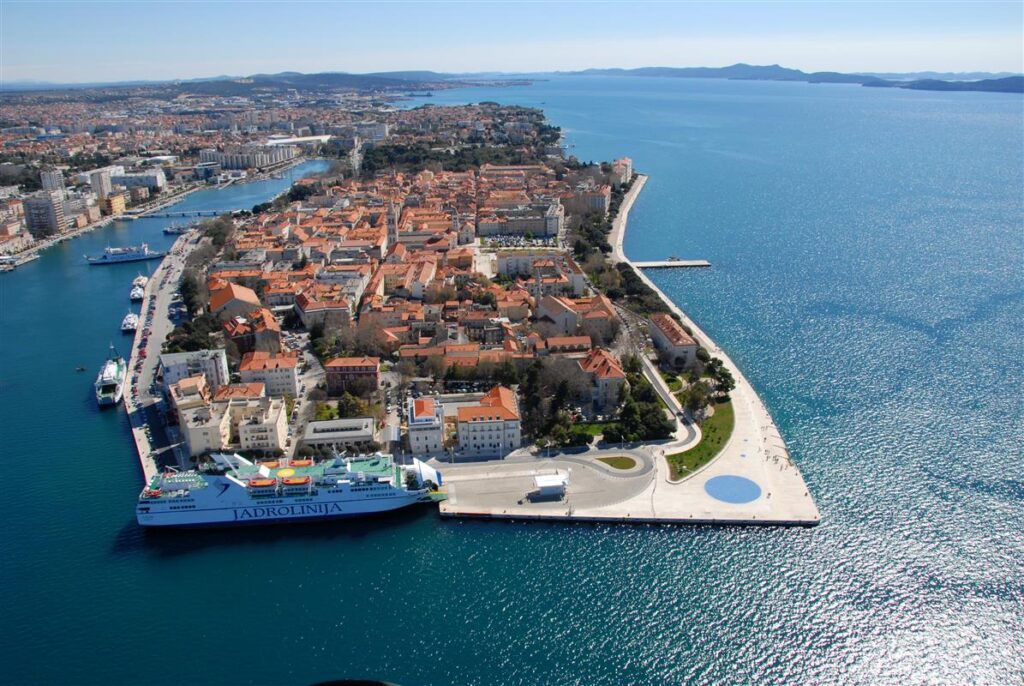
Zadar is a city located in Croatia, on the coast of the Adriatic Sea. It is known for its historical and cultural significance, as well as its beautiful beaches and coastal scenery. Some of the main attractions in Zadar include the Roman Forum, the St. Donatus Church, and the Sea Organ, a unique musical instrument that is played by the waves. Additionally, the city is home to many museums and art galleries, as well as a variety of shops, restaurants, and nightlife options.
10 BEST SIGHTS IN ZAGREB,CROATIA
How to get to Zadar from Zagreb
There are several ways to get from Zagreb to Zadar, including by bus, train, and car.
By bus: There are several daily buses from Zagreb to Zadar, which take around 3 hours. Prices vary according to the bus company you use, but they are 14 – 27 euro in general. Bus is the cheapest way of traveling between Zadar and Zagreb.
By train: There are several daily trains from Zagreb to Zadar, which take around 3.5 hours.
By car: The distance between Zagreb and Zadar is around 250km, and it typically takes around 3 hours to drive.
You can check the schedule and prices for bus and train tickets on the official website of the Croatian Railways (HŽPP) or bus companies like FlixBus and Bus.
Croatia Bus Information, Schedules
The Church of St. Donatus
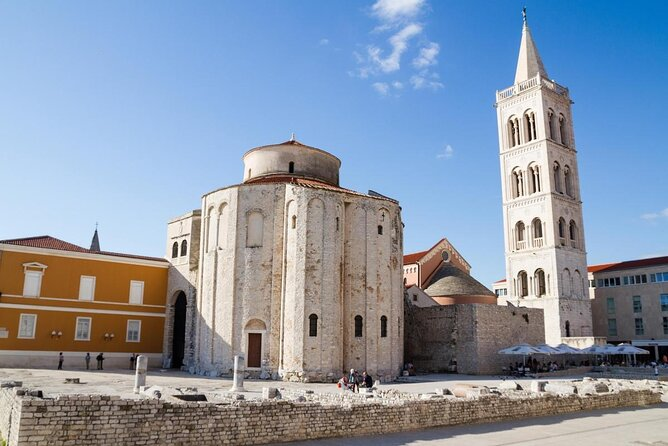
The Church of St. Donatus is a pre-Romanesque church located in the city of Zadar, Croatia. It is one of the most famous landmarks in the city, and is considered to be one of the best examples of early medieval architecture in Croatia. The church is named after Donatus of Zadar, a Christian bishop who is believed to have built the church in the 9th century.
The church is built in the shape of a rotunda, with a central dome and an ambulatory surrounding it. The exterior is plain, with a simple arched entrance and a series of small windows. The interior of the church is decorated with intricate carvings and frescoes, including a depiction of the Last Judgment on the dome. The church is also known for its acoustics, which make it a popular venue for concerts and other musical events.
St. Donatus is one of the most important cultural and historical monuments of Zadar and Croatia. Today, it is open to the public, and it is visited by thousands of tourists every year. It is also a protected cultural heritage of Croatia.
Roman Forum
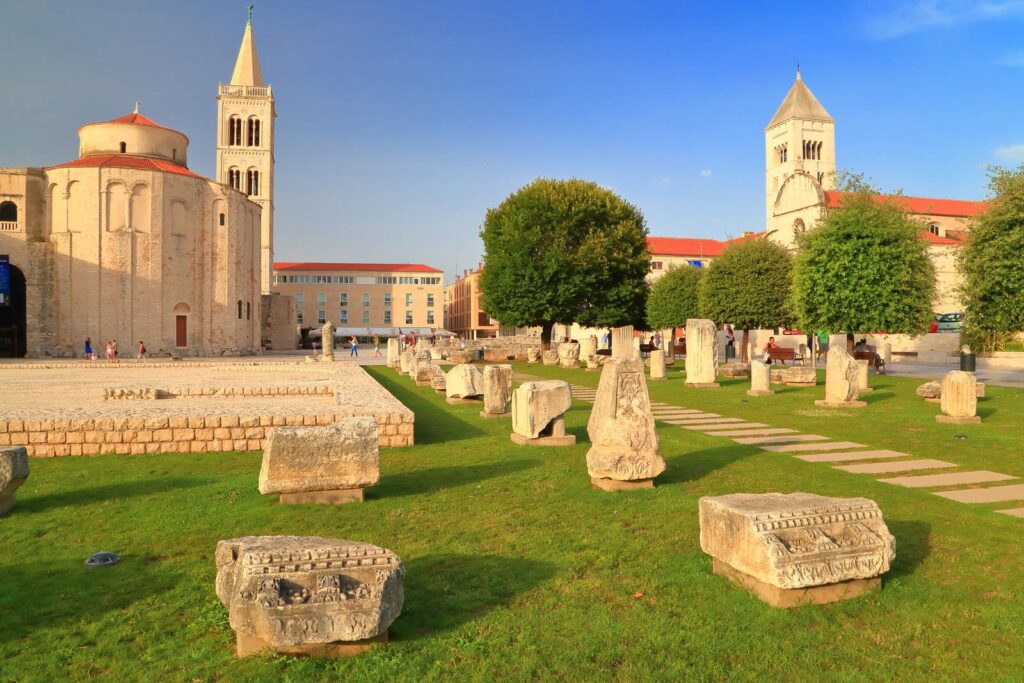
The Roman Forum in Zadar is an ancient public square that was the center of the Roman city of Iader. It was built in the 1st century AD and is one of the best preserved examples of a Roman forum on the eastern Adriatic coast. The square is located in the heart of the old town of Zadar, and its ruins are visible in the pavement of the modern square.
The Roman Forum in Zadar was a political, social and commercial center of the Roman city. The forum was surrounded by public buildings, such as a temple, a basilica, and a public latrine, as well as several private houses. The remains of the temple dedicated to Jupiter are still visible today, with the remains of its walls and the podium where the statue of the god stood.
The Roman Forum in Zadar is considered as a valuable cultural heritage of Croatia and it is open to the public. Visitors can explore the ruins and learn about the history of the Roman city of Iader. The square today is also a popular spot for locals and tourist to relax and enjoy the beautiful surroundings.
The Land Gate
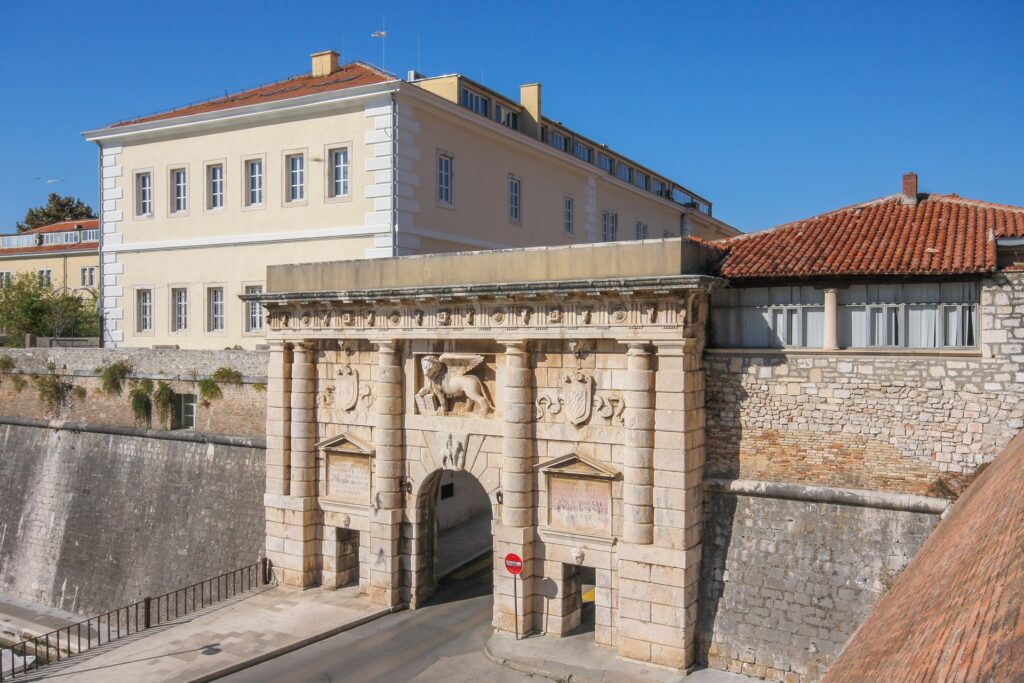
The Land Gate is a medieval city gate in Zadar, Croatia. It is one of the three gates that once formed the main entrance to the old town of Zadar. The Land Gate is located on the western side of the old town and is the only one that still stands today. The other two gates, the Sea Gate and the Harbour Gate, were demolished in the 19th century.
The Land Gate is a rectangular structure with a pointed arch, built of stone and brick. It was constructed in the 13th century and is a fine example of medieval military architecture. The gate was part of the town’s fortifications and served as the main entrance to the city for people arriving by land. It was also used as a customs point and was guarded by soldiers.
The Land Gate is a protected cultural heritage of Croatia and it is open to the public. Visitors can explore the gate and learn about the history of the city and its fortifications. It also offers a great view of the city and the surrounding area.
Sea Organ
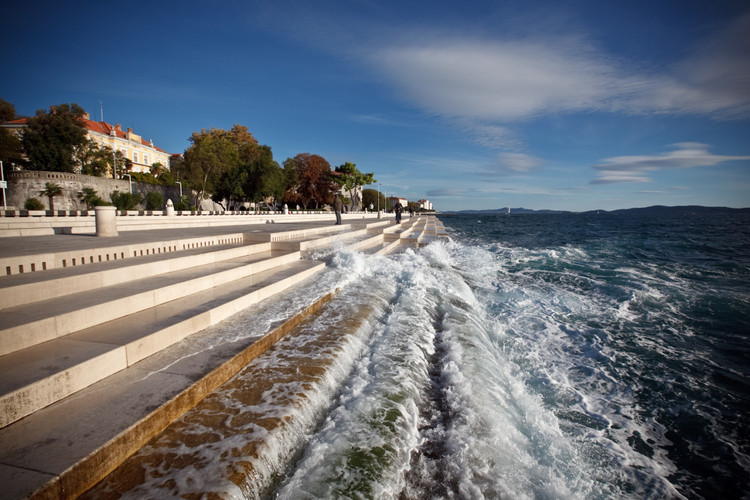
The Sea Organ is a musical instrument located in the city of Zadar, Croatia. It is located on the edge of the city’s seafront promenade, facing the Adriatic Sea. It was built in 2005 by the architect Nikola Bašić as a part of the renovation of the city’s waterfront. The Sea Organ is considered a unique and innovative architectural design, that combines the elements of architecture, sculpture and music.
The Sea Organ is made up of a series of 35 pipes that are built into the stairs leading down to the sea. These pipes are connected to the sea and as waves flow in and out of the pipes, it produces different tones and melodies. The sound is created by the movement of the water in the pipes, making it a natural instrument that is never the same twice.
The Sea Organ is a popular attraction in Zadar, and it is visited by thousands of people every year. It is also considered a symbol of the city’s connection to the sea and its innovative design. Visitors can sit and listen to the music of the sea organ, or take a walk along the promenade and enjoy the unique sound. The Sea Organ is a unique and creative way to combine architecture, nature and music and it makes a perfect addition to the Zadar waterfront.
The Greeting to the Sun
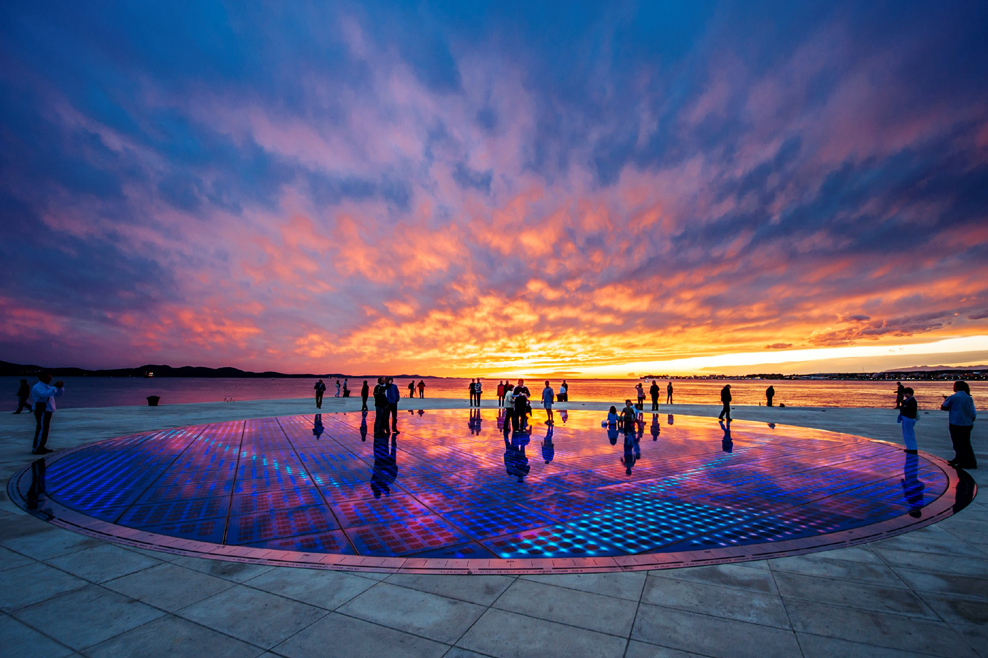
The Greeting to the Sun is an installation located in the city of Zadar, Croatia. It was designed by the architect Nikola Bašić and it was completed in 2008. The installation is located on the same promenade as the Sea Organ, near the city’s old town, and it is a part of the renovation of the city’s waterfront. The Greeting to the Sun is considered a unique and innovative piece of architecture and art.
The Greeting to the Sun is made up of 300 multi-layered glass plates that are set into the pavement. These glass plates are connected to solar panels, which absorb the sun’s energy during the day. At night, the stored energy is used to power a light show that illuminates the glass plates. The light show is choreographed to create different patterns and colors that change with the movement of the sun and the tides.
The Greeting to the Sun is a popular attraction in Zadar, and it is visited by thousands of people every year. It is also considered a symbol of the city’s connection to the sun and the sea. Visitors can watch the light show and enjoy the unique view of the sea while listening to the music of the sea organ. The Greeting to the Sun is a unique and creative way to combine architecture, nature, and art and it makes a perfect addition to the Zadar waterfront.
People’s Square
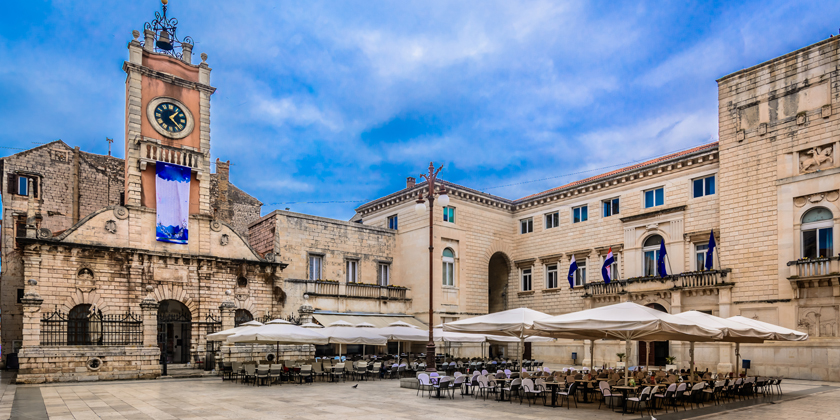
The People’s Square, also known as Narodni Trg, is a public square located in the city of Zadar, Croatia. It is located in the heart of the city’s old town and is one of the main gathering places for locals and tourists. The square is surrounded by several historical buildings and monuments, such as the St. Anastasia Cathedral, the Palace of the Governor and the City Lodge, which are considered valuable cultural heritage of Croatia.
The People’s Square has a long history, it was originally used as a market place during the Roman times, then as a forum during the Middle Ages and later as a public square. Today, it is a popular spot for locals and tourists to relax, socialize and enjoy the city’s lively atmosphere. The square is also a popular spot for events, such as concerts, festivals and fairs, which are held throughout the year.
Kolovare Beach
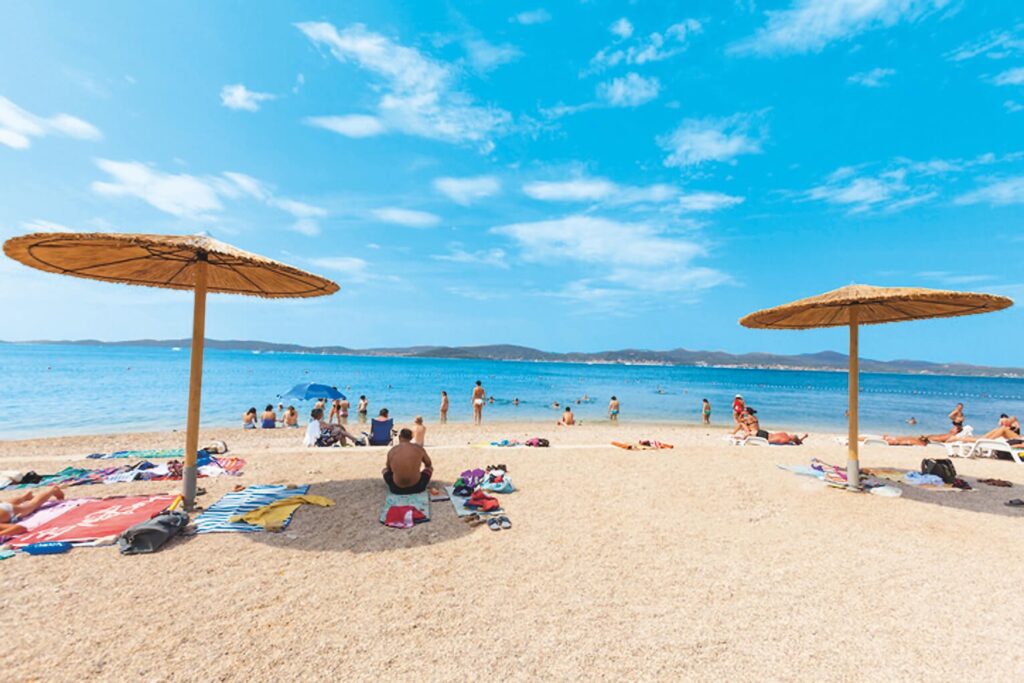
Kolovare Beach is a public beach located in the city of Zadar, Croatia. It is located on the western side of the city, near the old town and it’s considered one of the most popular beaches in the area. The beach is known for its fine sand, crystal-clear water and a great view of the city and the nearby islands.
Kolovare beach is well-equipped with amenities, such as showers, changing rooms, and restrooms. There are also a number of restaurants, cafes, and bars located nearby, which offer a variety of local cuisine and drinks. The beach is also a great spot for water sports, such as swimming, jet-skiing, and parasailing, as well as sunbathing, and relaxing. There is also a playground area for children.
The beach is also connected to the city’s promenade, which offers a great spot for a walk or a bike ride, with a great view of the sea and the city. The beach is also accessible by public transport.
Church of St. Simon
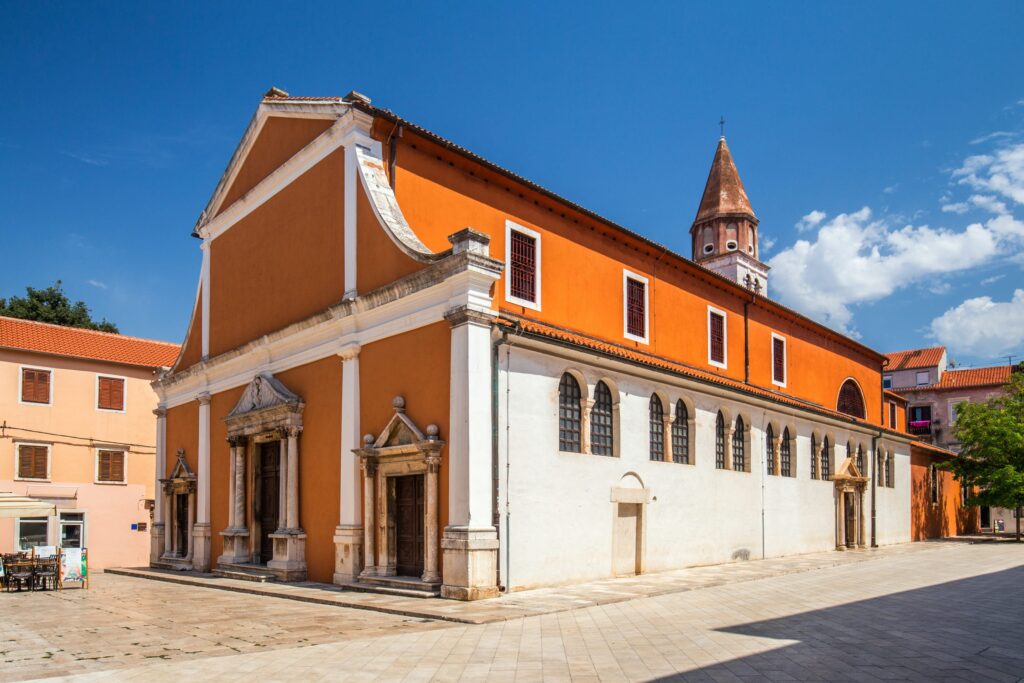
The Church of St. Simon is a pre-Romanesque church located in the city of Zadar, Croatia. It was built in the 9th century and is one of the oldest churches in the city. The church is dedicated to Simon the Zealot, one of the twelve apostles of Jesus.
The church is a small, single-nave structure built of stone and brick, with a semicircular apse and a wooden roof. The exterior is plain, with a simple arched entrance and a series of small windows. The interior of the church is decorated with frescoes, including a depiction of St. Simon in the apse.
The Church of St. Simon is considered a valuable cultural heritage of Croatia and it is open to the public, although it is not as well-known as some of the other churches in the city. It is one of the oldest standing church in Zadar and it offers a glimpse into the city’s early Christian history. Visitors can explore the church and learn about its history and architecture.
Musée National de Zadar
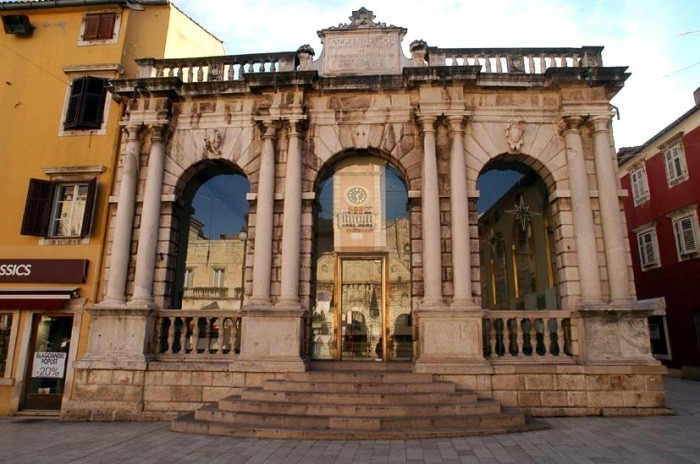
The Musée National de Zadar (National Museum of Zadar) is a museum located in the city of Zadar, Croatia. It is the main cultural institution in the city and it is responsible for preserving and promoting the region’s cultural heritage. The museum is housed in several buildings in the city, including the Governor’s Palace and the City Lodge, which are considered valuable cultural heritage of Croatia.
The museum’s collection includes a wide range of artifacts, from prehistory to the present day, that reflect the history and culture of Zadar and the surrounding region. Some of the highlights of the collection include Roman and medieval artifacts, such as mosaics, ceramics, and sculptures, as well as a collection of paintings, drawings, and prints from the 15th to the 20th century. The museum also has a collection of ethnographic items, including traditional costumes and folk art, as well as a collection of maritime items, including ship models and navigational instruments.
The Musée National de Zadar is open to the public and it is a great place to learn about the history and culture of the city and the region. The museum is also a popular spot for visitors to the city and it is considered an important cultural destination.